The Asian Institute for Policy and Engagement (AIPE) at the University of Nottingham Malaysia (UNM) held its inaugural roundtable, Critical Minerals, Critical Choices: A Roundtable on Malaysian Rare Earth Policy, on 28 October 2026 at Sheraton Petaling Jaya Hotel. Organised in partnership with the Friedrich Naumann Foundation for Freedom (FNF), the closed-door session gathered around 50 stakeholders from federal and state government, industry, think tanks, academia, civil society and the diplomatic community, including five ambassadors and high commissioners.
Dr Tricia Yeoh, Director of AIPE, welcomed guests, followed by opening remarks from Katrin Bannach, Project Director (Malaysia and Indonesia) at FNF. Professor Shahir Liew, Vice Provost for Research and Knowledge Exchange at UNM, and YB Howard Lee, Member of Parliament for Ipoh Timor and Chair of the Parliamentary Caucus on Critical Minerals, also attended.
Tengku Datuk Seri Utama Zafrul Aziz, former Minister of Investment, Trade and Industry (MITI) and Chairman of the Southeast Asian Futures Initiative Centre (SEAFIC), delivered the special address. Tracing Malaysia’s processing foothold to Japan’s response to a 2010 supply disruption, he called it “the product of another country’s resilience strategy.” On governance, he added: “Clearer coordination, transparent requirements and credible enforcement can protect communities while giving responsible investors greater certainty.”
Dr Tricia Yeoh’s Research on Federal–State Alignment
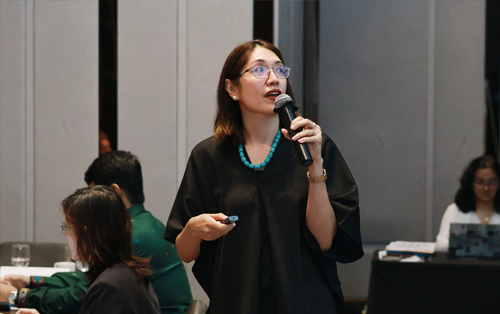
In the second panel, Governance and Sustainability of Malaysian Rare Earths, Dr Tricia presented her policy paper, Ambition Without Alignment: Managing Malaysia’s Rare Earth Value Chain (2026). The paper examines the split in rare earth responsibilities, with states overseeing land, mining licences and royalties while the federal government handles mineral development and exports. “The federal and state governments could achieve a shared positive outcome if interests, incentives and policies are aligned well,” Yeoh writes, adding that such coordination “would significantly boost Malaysia’s position in the world.” Respondents Dato’ Sri Mashal Ahmad, Managing Director and Vice-President of Lynas Malaysia; Associate Professor Dr Mohd Hanif Yaacob of Universiti Putra Malaysia, Strategic Consultant at the Terengganu Strategic & Integrity Institute; Hiu Dilangit Sasongkojati of the University at Albany, SUNY; and Wong Siew Lyn, Co-Founder of Macaranga, explored royalties, environmental safeguards and community rights.
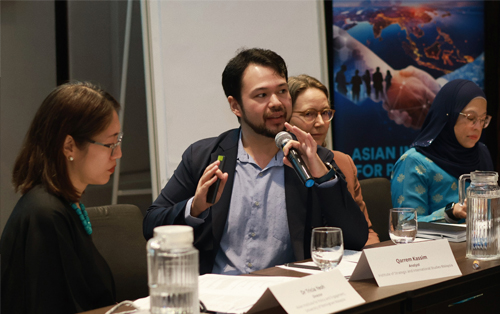
The first panel, Geopolitics and Geoeconomics of Malaysian Rare Earths, featured Qarrem Kassim, Analyst at the Institute of Strategic and International Studies (ISIS) Malaysia, presenting From Mine to Magnet: Positioning Malaysia in the Emerging Global Supply Chain. H.E. Rafael Daerr, Ambassador of the European Union to Malaysia; Dato’ Rus Shazila Osman, Acting Director General of the Institute of Diplomacy and Foreign Relations (IDFR); and Lim Wei Hung, Executive Director and Chief Operating Officer of Southern Alliance Mining Ltd., responded on global supply concentration, diversification and the talent and technology the sector needs.
Key priorities emerged: stronger federal–state coordination, local technological and talent development, meaningful international partnerships and responsible resource management. Insights from the roundtable will feed into AIPE’s forthcoming policy briefs. Readers can follow AIPE’s upcoming research and events on LinkedIn and Instagram.
“The answer lies not in what is beneath our soil, but in the choices we make above it,” said Tengku Zafrul.
AIPE’s first roundtable signals UNM’s continued commitment to research that shapes national policy and bridges government, industry and academia.
Posted on 24th November 2026